
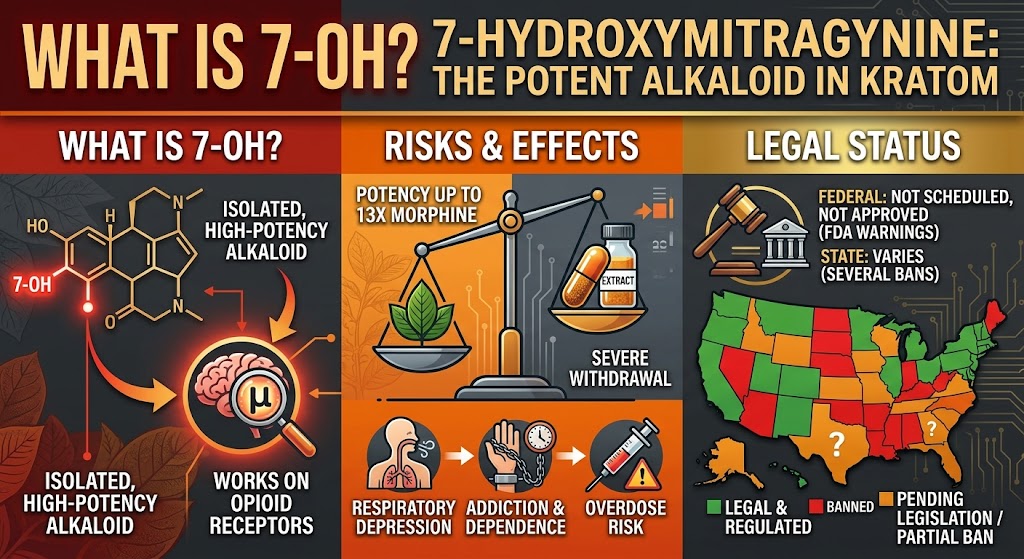
7OH, also written 7-OH, usually refers to 7-hydroxymitragynine, a compound associated with the kratom plant. The term can appear on product labels, in health warnings, and in news about changing regulations. One distinction matters from the start: trace 7-OH naturally present in kratom leaf is not the same as a concentrated product sold with 7-OH as an active ingredient. This guide explains what 7-OH is, how it differs from kratom, what health concerns are known, and the latest U.S. federal status as of October 6, 2026.
What Is 7-Hydroxymitragynine?
Kratom (Mitragyna speciosa) is a tree whose leaves contain several alkaloids, including mitragynine. 7-Hydroxymitragynine (7-OH) occurs naturally in kratom in trace amounts and can also form in the body as a metabolite of mitragynine. It is active at opioid receptors, which helps explain why concentrated 7-OH products can have opioid-like effects.
Commercial products marketed as 7-OH may contain added or enhanced concentrations and can be sold in forms such as tablets, gummies, drink mixes, or shots. The U.S. Food and Drug Administration (FDA) says these concentrated products are different from traditional kratom leaf and recommends that consumers avoid products containing 7-OH.
7-OH vs. Kratom: What Is the Difference?
The terms are related, but they are not interchangeable. Kratom leaf is plant material containing multiple natural compounds; 7-OH is one specific alkaloid. Products labeled “7-OH” may be concentrated or have added amounts far beyond the trace levels naturally present in leaf. Product names and marketing can blur this distinction, so check the ingredient list rather than assuming that a 7-OH product is ordinary kratom.
This difference is important for safety: evidence about traditional plant material cannot automatically establish the safety of a concentrated formulation. ACMT notes that human safety information for concentrated 7-OH is limited and that a safe dose has not been established.
Effects and Potential Health Risks
Because 7-OH acts on opioid receptors, exposure may cause opioid-like effects. Health authorities and medical toxicologists have raised concerns about intoxication, sedation, respiratory depression, tolerance, dependence, and withdrawal. The FDA has also received reports involving anxiety, depression, nausea or other gastrointestinal distress, insomnia, seizures, and withdrawal symptoms such as restlessness, body aches, fatigue, irritability, and cold sweats. The amount and composition of products can vary, so a label may not reliably predict an individual response.
Repeated use may lead to tolerance or physical dependence. A person who has been using 7-OH regularly and wants to stop should speak with a health professional rather than trying to manage difficult withdrawal alone. ACMT reports that clinicians have treated 7-OH dependence and withdrawal with medications used for opioid use disorder, including buprenorphine or methadone; treatment decisions belong with a qualified clinician.
Avoid combining 7-OH with alcohol, benzodiazepines, opioids, or other sedating substances. Combining substances that can slow breathing may increase the risk of respiratory depression and overdose. No unverified “safe dose” claim should replace medical advice; the safety profile and toxic dose are not established.
Possible Overdose: When to Get Emergency Help
Slow, shallow, or stopped breathing; inability to wake; extreme sleepiness; confusion; or a seizure after taking a 7-OH product needs urgent attention. Call 911 immediately if the person is unresponsive or having trouble breathing. Naloxone may help reverse opioid-related respiratory depression when available, but do not delay emergency services. In the United States, the Poison Help Line is 1-800-222-1222 for exposure advice.
Is 7-OH Legal in the United States?
The answer depends on the product and the type of regulation. The FDA states that there are no FDA-approved products containing 7-OH and that 7-OH is not lawful as a dietary-supplement ingredient or when added to conventional foods. Those FDA statements are separate from whether a compound has been placed on a federal controlled-substances schedule.
For the latest federal scheduling update, the Congressional Research Service reported on October 6, 2026 that the DEA had announced its intent to temporarily schedule 7-OH above specified thresholds but had not finalized that temporary scheduling order. The July notice proposed thresholds for certain botanical, synthetic, and further-processed products; it was a notice of intent, not itself a final scheduling order. Three related compounds—mitragynine pseudoindoxyl, MGM-15, and MGM-16—were temporarily placed in Schedule I on August 26, 2026. State laws may differ or be more restrictive, so check current official guidance where you live.
Because scheduling can change, avoid relying on old articles, retail listings, or social-media posts for legal advice. Confirm the current status with official federal and state sources before making a legal decision.
Frequently Asked Questions
Is 7-OH the same as kratom?
No. 7-OH is one alkaloid found naturally in trace amounts in kratom. A concentrated or enhanced 7-OH product is not equivalent to ordinary kratom leaf.
Is 7-OH an opioid?
7-OH acts on opioid receptors and can produce opioid-like effects. FDA describes concentrated 7-OH products as potent opioid products. The term “opioid” can also have specific legal meanings, so distinguish pharmacology from a substance’s current legal scheduling.
Can 7-OH cause dependence or withdrawal?
Yes. Medical toxicologists report tolerance, dependence, and opioid-like withdrawal associated with 7-OH. If stopping feels difficult, contact a healthcare professional or addiction-medicine service.
Has the DEA scheduled 7-OH federally?
As of the Congressional Research Service update dated October 6, 2026, the DEA had not finalized the temporary scheduling order for 7-OH itself. The legal status can change; verify it against current official sources.
The Bottom Line
7-OH is a kratom-related compound with opioid-receptor activity, and concentrated products raise serious safety concerns. It should not be confused with trace 7-OH naturally present in kratom leaf, and it is not an FDA-approved treatment. If someone may be experiencing an overdose, call 911. For ongoing use, withdrawal, or questions about health, contact a qualified healthcare professional. For legal questions, check current federal and state rules rather than relying on outdated summaries.