Tech
Advancements in Boat Engine Technology for Efficient Marine Travel

Key Takeaways
- Electric and hybrid propulsion systems are setting new standards for clean, efficient marine travel.
- Smart technology and connectivity boost real-time monitoring, predictive maintenance, and operational safety.
- Advanced materials and hull designs help optimize fuel efficiency and improve vessel operations.
Marine travel is experiencing remarkable progress, largely due to a series of critical advancements in boat engine technology. Whether you are a professional captain, an avid recreational boater, or someone new to life on the water, staying informed on the latest trends can ensure a safer, cleaner, and more enjoyable experience. Innovations in propulsion, connectivity, smart monitoring, and renewable integration are at the forefront of making marine journeys not only more efficient but also more environmentally responsible. Anyone shopping for modern marine equipment or simply interested in upgrading vessel performance should explore options like Barnegat Lighting for inspiration and up-to-date solutions that reflect the latest innovations.
Engineers and manufacturers are prioritizing new technologies that not only deliver greater speed and reliability but also minimize the environmental impact of boating. Improved designs and smarter materials support quieter rides, reduced emissions, and lower lifetime vessel maintenance costs. This surge in technological development covers all aspects of boating, from leisure boats and fishing crafts to commercial and passenger vessels. As solutions evolve, boat owners benefit from a broader spectrum of options tailored for a variety of marine applications and lifestyle choices.
Electric and Hybrid Propulsion Systems
The marine sector is actively transitioning to greener, more economical power sources by adopting electric and hybrid engines. These propulsion systems create less noise and almost no direct emissions, significantly improving the onboard experience, especially important for recreational boaters and eco-focused commercial operations. The E1 Series, with its state-of-the-art RaceBirds, illustrates real-world application of this technology. These electric boats leverage hydrofoil technology to glide above the water, dramatically reducing drag and conserving energy while achieving impressive speeds of up to 50 knots. Their minimal wake generation helps protect fragile coastlines from erosion. The combination of battery-powered propulsion and innovative hulls is helping redefine the boating landscape, making sustainable travel a reality.
Smart Integration and Connectivity
Technology has become a central feature of modern boating, with digital interfaces allowing users to monitor boat health, set course plots, and optimize fuel management effortlessly. Real-time performance data is accessible through smartphones, tablets, and dedicated touchscreens, allowing users to detect minor engine irregularities before they escalate. Cloud connectivity provides instant access to diagnostics, location tracking, and maintenance planning, boosting both safety and convenience on extended trips or remote waterways. As Popular Mechanics explains, this smart revolution in boating helps establish proactive maintenance schedules and significantly reduces the risk of catastrophic engine failure.
Advanced Hull Materials and Design
The choice of hull material is another area where advances can lead to major performance and sustainability gains. New construction materials, such as carbon fiber composites and graphene-enhanced coatings, are rapidly replacing traditional fiberglass. These materials drastically reduce vessel weight without compromising strength or protection, directly translating into increased speed and reduced fuel consumption. Additionally, new self-healing coatings can automatically repair minor abrasions, preserving hull integrity and reducing routine maintenance and costly repairs. As highlighted in recent industry publications, such improvements are making boating more accessible and reliable than ever before.

Renewable Energy Integration
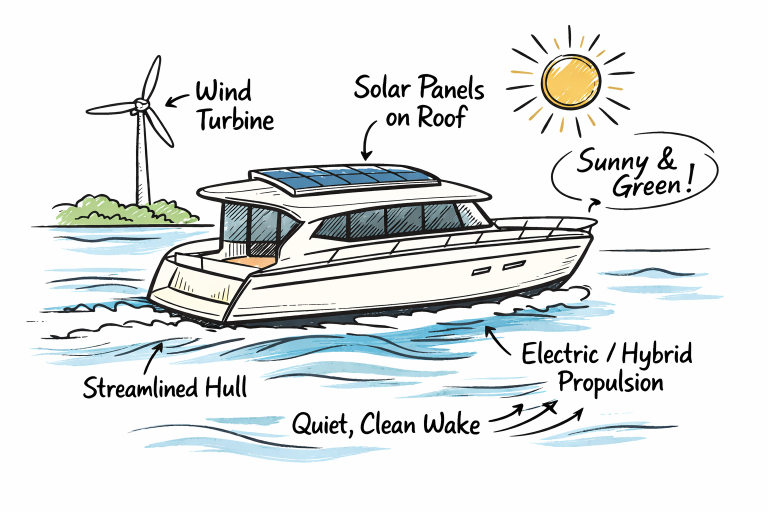
Boats designed for longer stays on the water, such as liveaboard yachts and ocean-crossing vessels, increasingly feature integrated renewable energy sources. Solar panels and compact wind turbines provide reliable, clean power for ancillary systems such as refrigeration, lighting, and navigation. Modern flexible solar panels are light and easy to mount on any surface, further expanding their potential application. By harnessing renewable energy, boaters can reduce reliance on fossil fuels, lower operating costs, and ensure continuous power availability, especially in isolated environments. For those considering a longer voyage, resources by Forbes provide insight into how these sustainable energy trends are shaping the marine world.
Augmented Reality (AR) Displays
Augmented reality is transforming navigation and safety practices on the water. With AR-equipped displays, critical data such as nautical charts, weather updates, and hazard alerts are seamlessly projected onto the helm view or compatible eyewear, giving captains immediate contextual awareness. This innovation ensures that operators have instant access to essential information without diverting their attention from navigating challenging waterways. By increasing situational awareness, AR technology significantly reduces the risk of accidents, particularly when boating in poorly marked or unpredictable environments.
Conclusion
The rapid advancement of boat engine technology is steering the entire marine sector toward greater efficiency, sustainability, and enjoyment. With electric and hybrid powerplants, smart digital systems, advanced hull engineering, growing reliance on renewable energy, and revolutionary AR displays, the modern marine experience is defined by choice and enhanced capability. As these trends continue to develop, boat owners and marine professionals stand to benefit from a new era of high-performance and environmentally conscious travel on the water.