
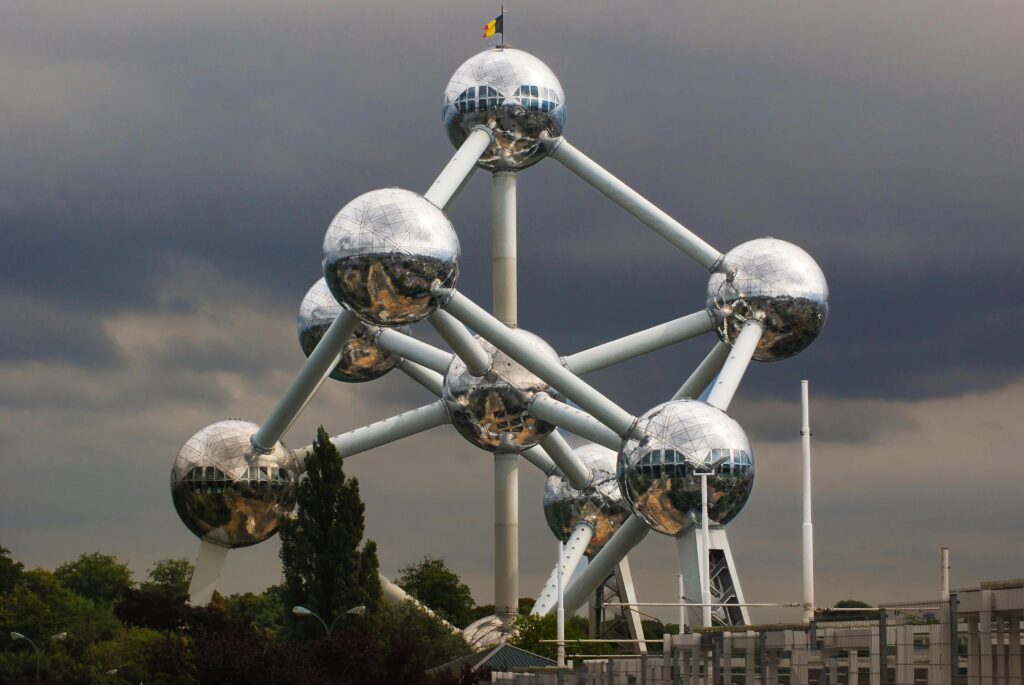
Belgium is a small yet highly influential country located in Western Europe. Despite its modest size, Belgium plays a major role in European politics, global trade, culture, and history. Known for its medieval cities, delicious chocolates, waffles, fries, and strong beer culture, Belgium offers a rich blend of tradition and modernity. It is also the political heart of Europe, hosting major international institutions such as the European Union and NATO.
Geography and Location
Belgium is bordered by France to the southwest, Germany to the east, Luxembourg to the southeast, and the Netherlands to the north. The country also has a coastline along the North Sea, which supports trade, fishing, and tourism.
Geographically, Belgium is divided into three main regions:
- Coastal Plain – flat land near the North Sea
- Central Plateau – fertile land used for agriculture
- Ardennes – a hilly, forested region in the southeast
This geographic diversity supports farming, industry, and tourism.
History of Belgium
Belgium’s history is shaped by centuries of foreign rule. It was once part of the Roman Empire, followed by control from Spain, Austria, France, and the Netherlands. Belgium officially became an independent country in 1830 after separating from the Netherlands.
During both World War I and World War II, Belgium played a significant strategic role due to its central European location. Many famous battles were fought on Belgian soil, leaving a lasting impact on the nation’s identity.
Today, Belgium is a constitutional monarchy with a strong democratic system.
Government and Political Importance
Belgium is a federal constitutional monarchy. The King serves as the head of state, while the Prime Minister leads the government. The country is divided into regions and communities, each with its own authority.
Belgium is globally important because:
- Brussels is the capital of the European Union
- It hosts NATO headquarters
- It is a center for international diplomacy
This makes Belgium one of the most politically influential countries in the world relative to its size.
Languages and Culture
Belgium is a multilingual country with three official languages:
- Dutch (Flemish) – spoken in Flanders
- French – spoken in Wallonia
- German – spoken by a small community in the east
Belgian culture is a mix of Germanic and Latin influences. Art, music, literature, and architecture play an important role in daily life. Belgium is famous for painters such as René Magritte and Peter Paul Rubens.
Festivals, parades, and local traditions are celebrated throughout the year, reflecting the country’s deep cultural roots.
Belgian Cuisine
Belgian food is world-famous and deeply loved by locals and tourists alike. Some iconic Belgian foods include:
- Belgian waffles
- Belgian chocolate
- French fries (Belgian fries)
- Moules-frites (mussels and fries)
Belgium is also known for its beer culture, offering more than 1,500 varieties of beer, many brewed using traditional methods passed down for generations.
Economy of Belgium
Belgium has a highly developed, export-oriented economy. Its central location makes it a major hub for logistics and trade in Europe. The Port of Antwerp is one of the largest ports in the world.
Key economic sectors include:
- Manufacturing
- Pharmaceuticals
- Chemicals
- Services and finance
- International trade
Belgium’s economy benefits from a skilled workforce, strong infrastructure, and political stability.
Education and Living Standards
Belgium has a high standard of living and a strong education system. Education is compulsory for children, and higher education institutions attract international students from across the globe.
Healthcare in Belgium is among the best in Europe, supported by a robust social security system. Citizens enjoy good work-life balance, public transport, and social welfare benefits.
Tourism in Belgium
Tourism is an important part of Belgium’s economy. Popular destinations include:
- Brussels – known for the Grand Place and Atomium
- Bruges – famous for canals and medieval architecture
- Ghent – a histor