
Key Takeaways
- Readiness includes physical soundness, basic handling skills, and emotional steadiness.
- Groundwork creates useful communication before a rider adds weight and new cues.
- Short, clear sessions are usually more productive than long sessions that create fatigue or frustration.
- Tack fit, hoof care, dental concerns, and soreness can affect behavior during early riding work.
- Resistance can be a sign of fear, confusion, discomfort, or pain rather than simple disobedience.
- Experienced help and proper safety equipment protect both horse and rider.
Starting a young or inexperienced horse under saddle is a major milestone, but it should never be treated as a race. In Lake County, Illinois, changing seasons, busy barn environments, and variable footing can all affect how a horse processes new experiences. Owners exploring saddle breaking Lake County IL, can look to Long Grove Farms in Kildeer as a local example of a program centered on progressive preparation. Its saddle-starting service emphasizes helping horses become comfortable with tack, riders, and basic communication, while taking into account each horse’s readiness.
The first ride shapes more than a horse’s ability to carry a rider. They help establish whether tack, mounting, movement, and human direction feel understandable and safe. A calm start supports the long-term goal: a willing horse that can learn without unnecessary fear, confusion, or physical discomfort.
Why the First Rides Matter
Early mounted lessons teach a horse how to balance with a rider, respond to new sensations, and remain attentive in an unfamiliar situation. The goal is not merely to get someone into the saddle. It is to build a safe partnership through calm repetition, clear requests, and fair release when the horse responds.
For horses in Lake County, a quiet enclosed arena or well-maintained indoor space can be especially useful when wind, rain, snow, or frozen ground make outdoor conditions less predictable. Training should place horse welfare and safety ahead of a calendar. The principles of equine welfare published by the American Association of Equine Practitioners reinforce the importance of minimizing fear, pain, distress, and suffering in horse activities.
Check the Horse’s Readiness
Age alone does not determine whether a horse is prepared for saddle training. Consider the horse’s development, soundness, handling history, temperament, and ability to settle in a work area. If a horse has unexplained resistance, lameness, back sensitivity, or a major behavior change, consult an equine veterinarian before asking for more demanding work.
A Simple Readiness Checklist
- Leads without pulling, crowding, or dragging behind.
- Stands reasonably quietly for grooming and routine handling.
- Lifts each foot calmly for hoof care.
- Accepts halter pressure and yields without panic.
- Can stop, turn, and stand in a safe enclosed area.
- Shows no obvious fear or pain during ordinary handling.
Build Ground Skills First
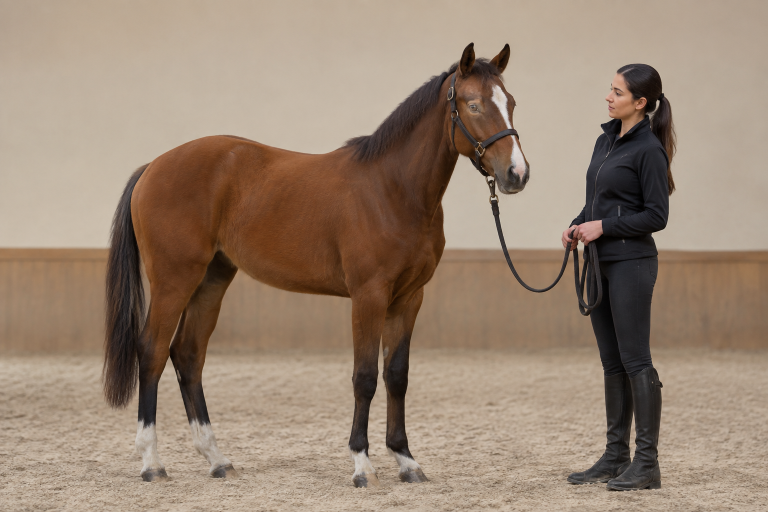
Groundwork gives the horse a familiar language before the added challenge of a rider. Practice leading, stopping, backing, turning, yielding the shoulders or hindquarters, and standing quietly. These exercises are not meant to exhaust the horse. They teach attention, body awareness, and a pattern of responding to light, consistent cues.
Useful preparation can include walking calmly past quiet objects, standing beside a mounting block, and accepting gentle touch around the barrel and girth area. End after a clear success when possible. A few focused minutes with a relaxed horse can be more valuable than continuing until the horse becomes tense or tired.
Introduce Tack in Small Steps
New equipment deserves its own introduction. Let the horse investigate the saddle pad in a safe environment, then place it gently and remove it without hurry. Add the saddle only when the horse remains settled. Check that the saddle is appropriate for the horse and does not appear to pinch, shift excessively, or restrict movement. Walk the horse quietly after tacking up so it can adjust to the sensation.
Pay attention to ear pinning, tail swishing, girth biting, hollowing through the back, or sudden resistance. These behaviors do not automatically reveal the cause, but they are reasons to pause and investigate. Dental issues, hoof balance, back soreness, and tack fit are all worth considering before increasing pressure or assuming a training problem.
Watch for Stress and Discomfort
A horse that is learning may hesitate briefly, look at a new object, or need time to understand a request. A horse that is overwhelmed often becomes increasingly tense, rushes, freezes, repeatedly spooks, or stops responding to familiar cues. The answer is usually to simplify the task, give the horse time, or end the session safely rather than forcing the issue.
Pause the Session When:
- The horse becomes more tense with each repetition.
- Familiar cues no longer elicit a recognizable response.
- Repeated signs of pain appear during tacking, mounting, or movement.
- The rider or handler feels unable to maintain control.
- The work area becomes slippery, crowded, loud, or otherwise unsafe.
Make the First Mount Safe
Use a secure enclosed area with a suitable footing, a calm, experienced helper, and a rider who can mount quietly. The horse should first stand beside the mounting block. The rider can place weight in the stirrup, lean over the saddle briefly, then dismount if the horse remains relaxed, only progress to sitting fully when the horse can accept each earlier step without rushing.
Once mounted, wait for a soft, quiet moment before asking for only a few walking steps. Reward calm responses by stopping, relaxing the reins, and finishing before the horse reaches fatigue. An approved riding helmet, proper footwear, and a helper on the ground are sensible precautions during this stage.
Create a Simple Training Plan
Progress does not need an artificial deadline. A flexible plan gives the horse time to understand each stage:
- Groundwork: Build calm leading, stopping, turning, and standing.
- Tack introduction: Help the horse move comfortably in basic equipment.
- Mounting practice: Teach stillness while accepting weight beside and above the saddle.
- First walks: Establish quiet forward movement and simple steering in a controlled setting.
- Mild distractions: Gradually introduce new but manageable sights, sounds, and locations.
Include turnout, rest days, and gradual changes in workload. Progress may move forward quickly, pause for several sessions, or require a return to an earlier lesson. That is normal training information, not a failure.
Know When to Seek Professional Help
Professional support is especially important when a horse bucks, rears, bolts, bites, panics, or becomes difficult to handle. These situations can place people and horses at real risk and may involve pain, fear, or training gaps that require careful assessment. Ask a prospective trainer about their approach, safety procedures, experience with comparable horses, and how they communicate with owners.
Horse welfare should remain the standard at every level of training. The horse welfare guidance from US Equestrian reflects the broader responsibility to protect horses’ health, safety, and well-being. A successful first ride is not measured by how far the horse travels or how quickly it advances. It is measured by calm communication, physical comfort, and a horse that is ready to learn again tomorrow.