
Table of Contents
- Technological Advancements
- Sustainability Practices
- Workforce Challenges
- Evolving Project Delivery Methods
- Data-Driven Decision Making
- Conclusion
The construction industry is undergoing rapid transformation. Advancements in technology, evolving project delivery frameworks, and an overarching commitment to sustainability are redefining what it means to manage successful projects. As these changes accelerate, professionals must stay ahead of the curve by understanding which trends will shape the market in the coming years. To see how professionals are already adapting to these developments, visit Koehncs.com. Proactively engaging with these changes can provide a major competitive edge and ensure organizations remain agile and effective.
From harnessing building information modeling to integrating renewable resources, construction management is not just about erecting structures. It is about operating smarter and more sustainably. Companies across the globe are rethinking the principles that once defined their industry. Through digital transformation and an increased focus on green initiatives, they are streamlining costs and mitigating risks by leveraging emerging technologies and fresh perspectives.
This article explores the most pivotal trends that are shaping the construction landscape in 2026. Each section delves into innovation and best practices, providing a comprehensive overview of what professionals need to stay informed and proactive in an increasingly complex industry. In doing so, leaders can create more efficient, sustainable, and resilient projects going forward.
Technological Advancements
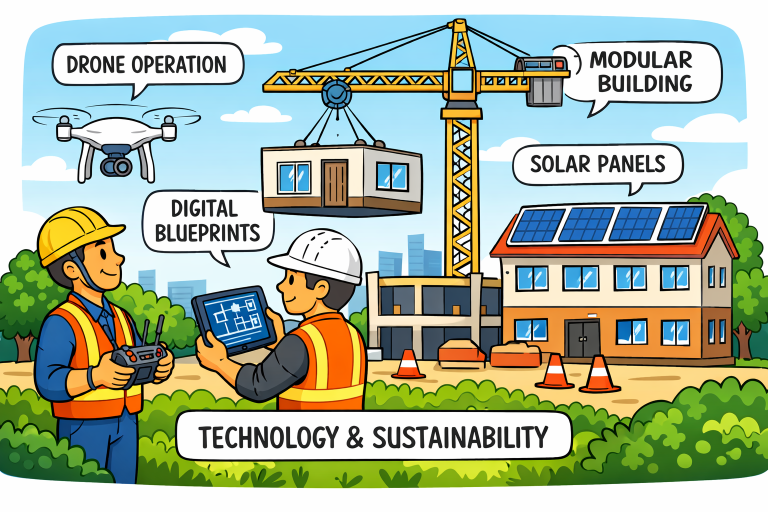
One of the most noticeable shifts in construction management is the widespread adoption of advanced digital tools. Building Information Modeling (BIM) has evolved beyond simple blueprints to 5D BIM, which layers project timelines and cost modeling onto the design. By incorporating time and expense into planning, managers can better identify inefficiencies and mitigate risks before they occur. In addition, the use of digital twins, virtual replicas of physical structures, provides real-time monitoring, predictive maintenance, and scenario testing, making construction projects more responsive and resilient.
Artificial intelligence (AI) and the Internet of Things (IoT) are also finding their way onto job sites. Connected sensors track equipment and personnel, generating data that improves site safety and resource management while also shortening project timelines. Drones, 3D printing, and augmented reality are not only streamlining workflows but also reducing material waste. These innovations help managers optimize everything from procurement to long-term facility management.

Sustainability Practices
With increasing scrutiny of environmental responsibility, the construction sector is embracing new sustainability standards. Modern projects routinely specify low-carbon materials, such as recycled steel and engineered wood, and employ modular building methods that minimize onsite waste. Green certifications like LEED and BREEAM are rapidly becoming industry norms as owners demand energy-efficient systems and designs that support climate resilience.
There is also a growing push to integrate renewable energy solutions directly into new builds, including solar panels, geothermal heating, and energy storage systems. These technologies help reduce operational costs and carbon footprints throughout a structure’s lifetime. Further, circular construction principles that prioritize the reuse and recycling of materials across projects are gaining traction among leading contractors.
Workforce Challenges
Amid innovation, a persistent challenge remains: the shortage of skilled construction labor. This gap, amplified by an aging workforce and fewer entrants into vocational trades, is hurting productivity and increasing project costs. In response, firms are ramping up investments in comprehensive training programs, leveraging technology to attract younger workers, and automating repetitive or dangerous tasks. Enhanced site safety and digitally-driven project management not only boost worker satisfaction but also create environments that are attractive to a new generation of professionals.
Evolving Project Delivery Methods
To meet the demands of modern construction, project delivery methodologies are changing as well. Integrated Project Delivery (IPD) fosters a culture of collaboration in which all stakeholders, from architects to subcontractors, share both risk and reward. This method brings transparency and aligns objectives, significantly reducing disputes and optimizing schedules. Cloud-based platforms are enabling real-time document sharing and communication, which are critical for managing increasingly complex projects. These innovations enable teams to respond to challenges more effectively and deliver better outcomes for owners and end users alike. For additional insights, For Construction Pros provides further analysis on collaborative delivery models and their impact on project success.
Data-Driven Decision Making
Another groundbreaking shift is the expanding role of analytics in construction management. Companies are accumulating massive amounts of data from connected field devices, drones, and management platforms. The ability to translate this data into actionable insights offers a real advantage in resource allocation, cost forecasting, and risk management. Advanced software tools are now available to help managers extract predictive analytics and real-time dashboards that improve on-site decisions and streamline communication among project teams. As project data becomes more accessible and transparent, firms will achieve higher levels of productivity and stronger project outcomes by relying on factual insights rather than intuition alone.
Conclusion
Construction management is evolving at a pace not seen before. Companies willing to embrace these emerging trends, whether by adopting 5D BIM, prioritizing sustainability, addressing labor shortages, or implementing collaborative delivery models, are better positioned to deliver innovative, cost-effective, and sustainable projects. Harnessing data analytics will further help leaders increase efficiency, optimize decision-making, and create value for clients and communities. As 2026 approaches, staying informed and applying these developments will be crucial for future success.