The word Cumhuriyet (commonly translated as Republic) comes from the Arabic root “jumhur,” meaning the public or the people. A republic is a form of government in which power belongs to citizens, and leaders are chosen directly or indirectly through elections. Unlike monarchies, where authority is inherited, a republic is built on the idea of popular sovereignty—the people are the true source of power.
The concept of Cumhuriyet is most famously associated with Turkey, where the Republic of Turkey was established on 29 October 1923 under the leadership of Mustafa Kemal Atatürk. However, republics exist all over the world and represent one of the most influential political systems in modern history.
What Is a Cumhuriyet?
A Cumhuriyet (Republic) is a political system where:
The head of state is elected (not born into power)
Laws are made by representatives of the people
Citizens have fundamental rights and freedoms
Government authority comes from the constitution
In simple terms, a republic puts people first, not kings or emperors.
Key Principles of Cumhuriyet
Most republics are based on several core principles:
1. Popular Sovereignty
All power belongs to the people. Citizens choose their leaders through voting.
2. Rule of Law
Everyone is equal before the law, including government officials.
3. Secular Governance
In many republics (such as Turkey), religion is separated from state affairs to ensure fairness for all citizens.
4. Democracy
People participate in decision-making through elections and representative institutions.
5. Equality
All citizens have equal rights regardless of gender, ethnicity, or background.
Historical Background of Cumhuriyet
The idea of republican government dates back to ancient Rome, where citizens elected representatives instead of accepting royal rule.
In the modern era, republics gained popularity after major revolutions, such as:
The American Revolution (1776)
The French Revolution (1789)
The Turkish Cumhuriyet
After World War I and the collapse of the Ottoman Empire, Mustafa Kemal Atatürk led a national movement that resulted in the founding of the Republic of Turkey in 1923.
Major reforms followed:
Abolition of the Sultanate
Introduction of civil law
Expansion of education
Women’s rights, including voting
Adoption of the Latin alphabet
These reforms aimed to build a modern, secular, and democratic society.
Why Cumhuriyet Matters Today
The republic system remains vital in today’s world because it:
Protects individual freedoms
Encourages accountability in leadership
Promotes civic participation
Supports social progress
Provides peaceful transitions of power
In a republic, leaders can be replaced through elections rather than violence, making it one of the most stable governance models.
Cumhuriyet vs Monarchy (Simple Comparison)
Feature
Cumhuriyet (Republic)
Monarchy
Head of State
Elected
Inherited
Power Source
People
Royal family
Citizen Rights
Guaranteed by constitution
Limited or variable
Leadership Change
Elections
Birth or succession
Modern Examples of Republics
Today, many countries follow a republican system, including:
Turkey
United States
France
Germany
Pakistan
India
Each republic operates differently, but all share the basic idea that authority comes from citizens.
FAQs About Cumhuriyet
Q1: What does Cumhuriyet mean?
Cumhuriyet means Republic, a system of government where power belongs to the people and leaders are elected.
Q2: Who founded the Turkish Cumhuriyet?
The Republic of Turkey was founded by Mustafa Kemal Atatürk in 1923.
Q3: Is every republic democratic?
Not always. While most republics aim to be democratic, true democracy depends on free elections, rule of law, and protection of rights.
Q4: Why is Cumhuriyet important?
It ensures equality, freedom, and participation of citizens in governance while preventing absolute rule by one person or family.
Q5: What is Republic Day in Turkey?
Turkey celebrates Cumhuriyet Day on 29 October every year to mark the founding of the republic.
Simple Calculation Example (Understanding Republic Age)
Let’s calculate how old the Turkish Republic is in 2026:
Founded: 1923 Current Year: 2026
Calculation:
2026 − 1923 = 103 years
👉 The Turkish Cumhuriyet is 103 years old in 2026.
This type of calculation is often used in history lessons to understand timelines and national milestones.
Conclusion
Cumhuriyet represents far more than just a political system—it symbolizes freedom, equality, and people’s power. From its ancient roots to modern democratic states, the republic model has shaped societies by placing citizens at the center of governance.
Whether in Turkey or elsewhere, Cumhuriyet continues to inspire progress, protect rights, and promote unity. It reminds us that a nation’s strength lies not in rulers, but in its people.
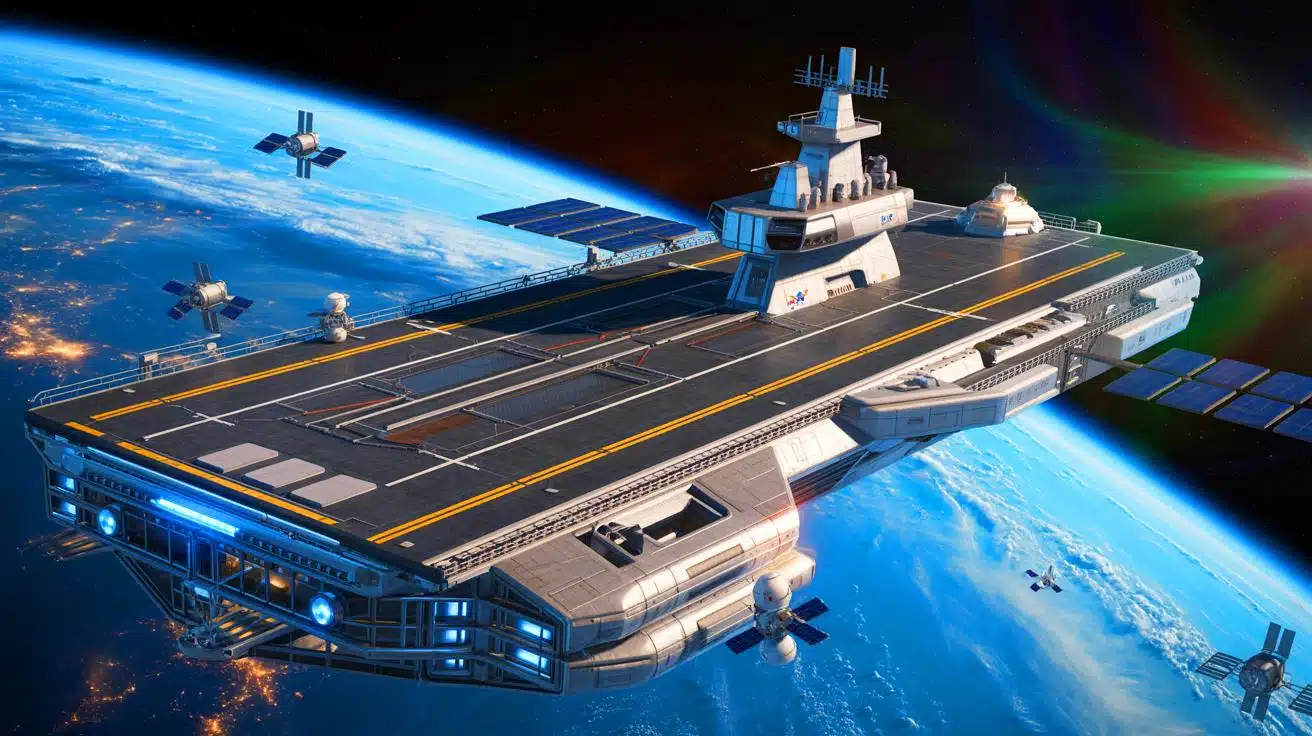
For decades, the concept of a massive warship patrolling the stars was relegated to the realm of science fiction, from Star Wars’ Star Destroyers to the battle stations of Battlestar Galactica. However, in 2026, fiction is rapidly becoming reality. The U.S. Space Force (USSF) is moving beyond traditional ground-based launches to develop the Orbital Carrier—a platform often described as the world’s first “orbital aircraft carrier”.
This article explores the technology, strategic purpose, and future of the Space Force’s most ambitious project to date.
What is an Orbital Carrier?
Unlike its naval counterpart, the orbital carrier is not a gargantuan ship teeming with thousands of sailors. Instead, it is a high-tech “mother ship” spacecraft designed to stay in orbit for extended periods, housing multiple maneuverable space vehicles.
Think of it as a pre-positioned launch pad in space. Rather than waiting days or weeks for a rocket to launch from Earth, the Space Force can “scramble” assets already in orbit to address emerging threats instantly.
Developer: Gravitics Inc., a Seattle-based space infrastructure firm.
Funding: Backed by a $60 million STRATFI contract from SpaceWERX, the innovation arm of the Space Force.
First Flight: A demonstration mission is currently targeted for as early as 2026.
Technical Specifications: The “Garage” in the Sky
The orbital carrier is built using a modified version of commercial space station modules. Its design focuses on protecting sensitive hardware while providing a rapid-release mechanism.
Size & Volume: Future operational versions are expected to feature approximately 60 cubic meters of internal volume.
Payload Capacity: The vehicle is designed to hold between 5,000 and 10,000 kg (approx. 22,000 lbs) of cargo.
The “Hangar” Design: Concept designs show a cylindrical module enveloped in solar panels that can open in orbit to release smaller “interceptor” or “reconnaissance” craft.
Environmental Protection: It provides an unpressurized environment that shields satellites from harsh thermal cycles, radiation, and even electronic warfare or laser blinding.
The primary driver behind this project is a shift in U.S. military doctrine toward Tactically Responsive Space (TacRS). Historically, if an adversary like China or Russia disabled a U.S. satellite, it would take months to build and launch a replacement. The orbital carrier changes the timeline from months to hours.
1. Combatting On-Orbit Threats
Adversaries are increasingly testing anti-satellite (ASAT) weapons, jammers, and maneuverable “stalker” satellites. The carrier allows the USSF to:
Instantly Replace: Deploy a fresh satellite if one is jammed or destroyed.
Counter-Maneuver: Launch “interceptor” craft to block or neutralize hostile vehicles.
Concealment: By keeping assets inside the carrier, the U.S. can hide the exact number and type of satellites it has ready, giving it a “tactical surprise” advantage.
2. Bypassing Ground Constraints
Weather delays, range availability, and vulnerable launch pads are the biggest bottlenecks for space defense. The orbital carrier bypasses these entirely, allowing for a deployment “at the time and place of our choosing”.
Future Outlook: From Satellites to Missile Intercepts
While the initial focus for the 2026 demonstration is space-to-space operations (deploying other satellites), the long-term vision is even broader.
Missile Defense: Future versions may carry sensors or interceptors capable of tracking and destroying hypersonic missiles from orbit.
Global Logistics: The USSF is exploring “Rocket Cargo” concepts, where the carrier could deploy pods containing emergency supplies or medical gear to any point on Earth in under an hour.
International Tensions: As space becomes a contested “warfighting domain,” these carriers will likely be at the center of debates regarding the militarization of space and the Outer Space Treaty.
Conclusion
The 2026 launch of the Space Force’s orbital carrier marks a pivotal moment in human history. It signifies the transition of space from a sanctuary of research to a domain of active, mobile defense. For blog readers and space enthusiasts alike, this isn’t just a new satellite—it’s the first step toward a true orbital fleet.
How do you think the international community will react to the first operational “space warship”? Are we entering a new Cold War in orbit?
Aviation is often described as hours of boredom punctuated by moments of sheer terror. For the passengers on Delta Connection flight DL3543 on July 7, 2025, that terror became a reality shortly after takeoff. What was scheduled as a routine one-hour “puddle jumper” from Minneapolis to Chicago transformed into a high-stakes emergency return, serving as a stark reminder of the rigorous safety protocols that govern modern air travel.
1. The Incident: Ten Minutes to Crisis
Flight DL3543, operated by an Embraer 175 (registration N259SY) under the Delta Connection brand by Endeavor Air, departed Minneapolis-St. Paul International Airport (MSP) bound for Chicago Midway (MDW).
The flight took off under normal conditions, but the situation deteriorated rapidly. Just 10 minutes into the climb, as the aircraft reached approximately 21,000 feet, the crew identified a critical mechanical issue. Pilots immediately leveled off the aircraft and “squawked 7700″—the universal transponder code for an in-flight emergency—requesting priority handling for an immediate return to Minneapolis.
2. Technical Breakdown: The Altitude Anomaly
While the official investigation is ongoing, initial reports from passengers and flight tracking data suggest a harrowing technical failure.
Uncontrolled Climb: Some passengers reported a “power interruption” before takeoff, followed by an alarming announcement once in the air. One passenger recalled the pilot shouting for an “Emergency Descent” and later explaining that once they hit 18,000 feet, the aircraft’s altitude “kept increasing” uncontrollably.
The Descent: Flight data confirmed the aircraft stopped its climb abruptly and performed a rapid descent back toward the airfield.
Safe Recovery: Despite the frantic nature of the cockpit alerts, the pilots maintained control, landing the aircraft safely on runway 12R just 37 minutes after its initial departure.
3. The Human Element: “It Got Eerily Quiet”
The psychological impact on passengers during such an event cannot be overstated. Descriptions of the cabin during the emergency descent depicted a scene of “power interruptions” and an “eerily quiet” atmosphere as the aircraft’s systems struggled.
Unlike many recent high-profile incidents, there were no reported injuries on DL3543. The flight crew was widely praised for their adherence to training, a sentiment echoed by Delta in their official apology to the affected travelers.
4. Broader Context: A Season of Scrutiny
The DL3543 emergency occurred amidst a cluster of significant aviation incidents in mid-2025 that have placed Delta and the wider industry under intense scrutiny:
Date
Flight
Issue
Result
July 7, 2025
DL3543
Mechanical Failure
Emergency landing at MSP; 0 injuries.
July 7, 2025
DL1334
Lithium Battery Fire
Diverted to Fort Myers after a backpack caught fire.
July 30, 2025
DL56
Severe Turbulence
25 hospitalized after a 1,000ft mid-air plunge.
These “close calls” have prompted statements from government officials, including Transportation Secretary Sean Duffy, who maintained that despite the uptick in visual incidents, aviation remains the “safest mode of transportation” in the country.
5. Conclusion: Lessons from the Flight Deck
The successful landing of DL3543 is a testament to pilot training and aircraft redundancy. Modern regional jets like the Embraer 175 are designed to withstand significant subsystem failures, provided the crew acts decisively.
For passengers, the incident serves as a reminder of the “Safety First” culture. While a 37-minute flight that ends where it started is a major inconvenience, the alternative—pushing a compromised aircraft to its destination—is a risk the industry is no longer willing to take.
Regular emissions testing helps identify and address vehicle issues that can affect performance and fuel efficiency.
Compliance with emissions standards is mandatory in many regions to reduce air pollution and protect public health.
Advancements in testing methods, such as self-service kiosks, have made the process more convenient for drivers.
Regular vehicle emissions testing is not just a regulatory requirement. It is an essential part of maintaining your vehicle’s health, optimizing performance, and protecting the air we breathe. In many areas, regular testing is the driver’s first line of defense against costly repairs and unforeseen breakdowns. If you’re seeking reliable emission service North Vancouver, understanding the broader benefits of emissions testing can demonstrate why this routine practice is so vital.
The emissions testing process checks for harmful pollutants our vehicle may emit. Even if your car seems to run fine, hidden faults in the exhaust system or engine sensors can go unnoticed until they become larger problems. For communities large and small, including metropolitan areas such as North Vancouver, participating in consistent emissions testing programs is a proactive way to help safeguard the environment.
Enhancing Vehicle Performance
Regular emissions testing acts as an ongoing health check for your vehicle. These tests routinely detect failing components, such as malfunctioning oxygen sensors and clogged catalytic converters. Vehicles that pass emissions testing tend to experience increased fuel economy, smoother starts, and more reliable power delivery. Early detection of these issues means your vehicle will likely last longer and provide fewer unpleasant surprises on the road.
According to Consumer Reports, identifying and resolving foundational exhaust problems through emissions testing increases overall vehicle efficiency and can help you avoid costly repairs in the long run.
Ensuring Regulatory Compliance
Most regions impose emissions standards that vehicles must meet to stay legally on the road. For example, in Texas, emissions tests remain compulsory in several metropolitan counties despite changes to broader safety inspection requirements. Vehicle owners who ignore these rules risk fines or being denied vehicle registration renewals. Keeping your car compliant with emissions standards is not only a matter of legality, but it also demonstrates social responsibility by helping reduce pollution.
Contributing to Environmental Health
Motor vehicles are a significant source of pollutants like nitrogen oxides, carbon monoxide, and volatile organic compounds. These emissions contribute to smog, acid rain, and respiratory issues in humans. Emissions testing programs play a critical role in reducing these harmful pollutants. According to the U.S. Environmental Protection Agency, reducing auto emissions is central to improving air quality and advancing public health goals.
Whether you live in a major city or a smaller community, participating in regular vehicle emissions testing helps ensure everyone enjoys cleaner air and a healthier environment.
Advancements in Emissions Testing
Recent technological changes have transformed emissions testing. In areas such as Colorado, drivers can now access self-service kiosks that operate around the clock. These 24/7 self-service machines have reduced wait times and increased accessibility for drivers with busy schedules. By integrating electronic record-keeping and faster diagnostic tools, emissions testing today is far more user-friendly and less time-consuming than in decades past.
Economic Benefits of Regular Testing
A significant advantage of consistent emissions testing is early detection of issues. Regular vehicle inspections help you identify minor problems before they become costly repairs. Well-maintained vehicles also consume less fuel, helping drivers save money at the gas pump. The costs of regular emissions testing are minimal compared to the potential expenses of engine or exhaust damage.
Convenience of Modern Testing Methods
Convenience is a major benefit of modern emissions testing. Facilities are available at more locations and at more flexible hours than ever before, allowing drivers to find a time that suits their needs. Self-service kiosks and digital inspection reminders reduce the inconvenience typically associated with traditional testing centers and make it easier to stay compliant year after year.
Addressing Common Misconceptions
A common myth is that only older vehicles require emissions testing. While newer models feature more advanced emissions controls, they can still develop faults that lead to excessive pollution. Regular emissions testing ensures that every vehicle on the road, regardless of age, continues to operate within acceptable environmental limits and maintains good fuel efficiency.
Final Thoughts
Consistent emissions testing is essential for meeting regulatory requirements, maintaining your vehicle’s performance, and making a positive environmental impact. Thanks to improvements in technology and accessibility, emissions testing has never been easier for drivers to incorporate into their routine vehicle care. By participating in these programs, drivers support broader efforts for cleaner air and healthier communities, benefiting everyone for years to come.







 Ganga Updates9 months ago
 Business9 months ago
 Sports9 months ago
 Apps9 months ago
 Ganga Quest9 months ago
 Lifestyle9 months ago
 Business9 months ago
 Tech9 months ago