
Connect with us

Business

Essential Tips for First-Time Buyers Seeking Scenic Homes

Published

on

Essential Tips for First-Time Buyers Seeking Scenic Homes

Key Takeaways

  • Establish a clear budget and fully understand the financial implications of buying a scenic home.
  • Consider energy efficiency, year-round appeal, and property-specific risks.
  • Utilize virtual tours, collaborate with local real estate agents, and conduct thorough inspections to ensure a seamless buying process.

Table of Contents

  • Define Your Budget and Financial Readiness
  • Research the True Cost of Homeownership
  • Prioritize Energy Efficiency
  • Evaluate the Location’s Year-Round Appeal
  • Conduct Thorough Inspections
  • Understand Property Taxes and Insurance
  • Leverage Virtual Tours and Technology
  • Engage with Local Experts

Define Your Budget and Financial Readiness

Purchasing a scenic home is an exciting step, but success starts with understanding your finances. Set a realistic budget that accounts for not only the asking price but also additional recurring expenses, such as maintenance, insurance, and property taxes. By getting your financial house in order up front, you can explore options confidently and avoid surprises later. If you’re considering properties in desirable areas with mountain or lake views, take a look at Tahoe City homes for sale to get a sense of current pricing and market trends.

According to research from Zillow, annual maintenance alone can average over $3,000, and that’s before factoring in repairs, HOA dues, and utilities. Preparing for these inevitable costs will ensure you can truly enjoy your scenic home without financial stress down the line.

Research the True Cost of Homeownership

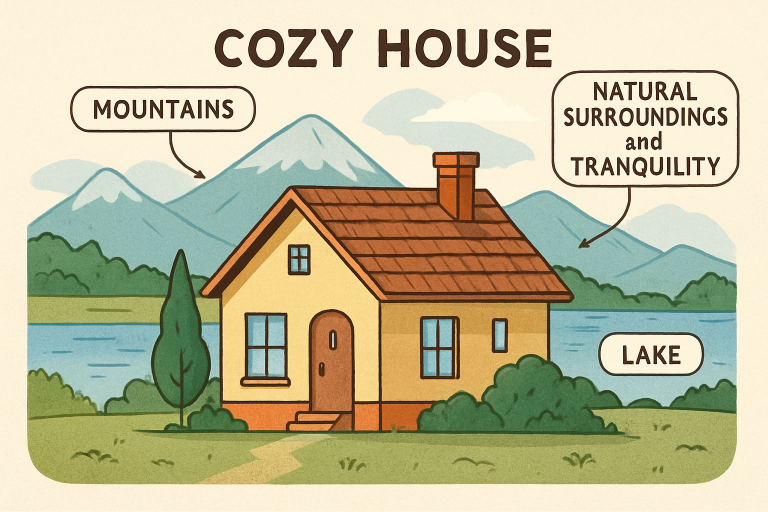
The dream of owning a home in a breathtaking locale comes with its own unique set of hidden costs. Beyond your mortgage payment, be prepared for seasonal and environmental demands. Homes in mountain settings may require special upkeep—a new roof to withstand snow loads, resilient windows, or even added landscaping to prevent soil erosion. Lakeside homes, meanwhile, may require regular pest control treatments or flood prevention systems. By understanding and budgeting for these challenges, you can avoid costly emergencies after move-in.

Prioritize Energy Efficiency

Energy efficiency should be top of mind, especially in remote or weather-impacted areas. Features like insulated windows, solar panels, smart thermostats, and LED lighting not only benefit the environment but can also significantly reduce monthly utility bills. Realtor.com highlights that buyers now place a premium on sustainable upgrades, making these features a wise investment for both your wallet and future resale value. When reviewing potential properties, examine energy ratings and ask about recent upgrades. Energy Star’s guide to saving energy at home offers invaluable strategies for new buyers.

Evaluate the Location’s Year-Round Appeal

Scenic homes are often valued for their proximity to outdoor recreation, but it’s essential to consider their utility and rental appeal throughout every season. For example, a mountain retreat may experience peak demand during the winter holidays, while lakeside homes might attract more interest in the summer. Analyze local tourism trends, trail access, and community events to maximize potential rental income, and ask local agents about which amenities are most sought after in every season. Thoughtful consideration of the property’s year-round versatility ensures it will remain attractive and profitable.
Conduct Thorough Inspections

Before finalizing a scenic property purchase, a rigorous inspection can save you future headaches. Not only should you bring in a standard inspector, but you should also consider experts to check for pests, water damage, and unique environmental concerns (like radon in mountain areas or septic system health for remote homes). Problems uncovered during inspection provide you with negotiation leverage and help you budget for any unavoidable repairs immediately.

Understand Property Taxes and Insurance

Ongoing costs, such as property taxes and insurance, require careful consideration, especially since scenic locations often incur higher rates. Research the property tax history and consult with several insurance providers about local risks, such as wildfires, floods, or snow damage. Factor in the likelihood of future increases to ensure your purchase is truly affordable over the long term.

Leverage Virtual Tours and Technology

Thanks to technology, buyers can now view properties nationwide without leaving home. Utilize virtual tours and 3D walk-throughs to efficiently narrow down selections, saving time and money before planning any site visits. For buyers relocating from out of town or with tight schedules, advanced online search tools and virtual reality tours are indispensable. These tools provide a comprehensive understanding of the property and its surroundings, ensuring a more informed shortlist before you travel for an in-person inspection.

Engage with Local Experts

Navigating the market for scenic homes requires specialized local expertise. Team up with a knowledgeable real estate agent who understands the area, from micro-climates and HOAs to tourist demand. A local agent can help you uncover market trends, hidden gems, and neighborhood quirks—giving you a decisive edge as you negotiate and close. Their connections with local inspectors, lenders, and service providers make your entire buying process smoother and more transparent.

By thoughtfully approaching your search and leveraging these essential tips, first-time buyers can secure a scenic home that delivers beauty, comfort, and long-lasting value.

Continue Reading
Click to comment

Leave a Reply

Your email address will not be published. Required fields are marked *

Business

Al Capone: The Rise and Fall of America’s Most Notorious Gangster

Published

on

By

Al Capone: The Rise and Fall of America’s Most Notorious Gangster

Alphonse Gabriel Capone, better known as Al Capone, remains one of the most infamous figures in American history. His name is synonymous with organized crime, prohibition-era bootlegging, and the dark underbelly of Chicago in the 1920s. While popular culture often romanticizes Capone as a charming, ruthless mob boss, the true story of his life—from humble beginnings to becoming a multi-millionaire criminal kingpin, and finally to his dramatic downfall—is a compelling tale of ambition, violence, and justice.

Early Life and Entry into Crime

Born in Brooklyn, New York, in 1899 to Italian immigrant parents, Capone grew up in a tough, impoverished neighborhood. He showed early academic promise but dropped out of school at age 14 after being expelled for striking a teacher. Capone then joined street gangs, where he fell under the mentorship of Johnny Torrio, a prominent gangster. A brawl at a bar left Capone with the distinctive scars on his face that earned him the nickname “Scarface”—a moniker he despised. After a fatal altercation, Torrio sent Capone to Chicago to lie low, unknowingly setting the stage for a criminal empire.

The Prohibition Era and Rise to Power

The passage of the 18th Amendment in 1920, which prohibited the sale and manufacture of alcohol, created a massive underground market. Capone recognized the opportunity immediately. Working under Torrio, he helped build an illegal bootlegging operation that supplied speakeasies throughout Chicago. When a rival assassination attempt left Torrio severely wounded in 1925, Torrio retired and handed the reins to his protégé. At just 26 years old, Al Capone became the boss of the Chicago Outfit.

Capone’s genius lay not just in violence but in organization and public relations. He expanded beyond bootlegging into gambling, prostitution, and loan sharking. He cultivated a public image as a “modern-day Robin Hood,” opening soup kitchens during the Great Depression and donating to charities. This carefully crafted persona made it difficult for law enforcement to rally public support against him. By 1929, Capone’s criminal empire was generating an estimated 100millionannuallyequivalenttoover100millionannuallyequivalenttoover1.5 billion today.

The St. Valentine’s Day Massacre

Despite his public charm, Capone ruled through fear and brutality. The most infamous example occurred on February 14, 1929. Rival gangster Bugs Moran had been encroaching on Capone’s territory. In a meticulously planned operation, Capone’s hitmen—some disguised as police officers—lined up seven members of Moran’s gang against a garage wall in Chicago’s Lincoln Park neighborhood and gunned them down in cold blood. The St. Valentine’s Day Massacre shocked the nation and turned public opinion firmly against organized crime. Although Capone was never charged for the murders, the massacre triggered a federal crackdown.

The Tax Evasion Takedown

Ironically, it was not murder, bootlegging, or racketeering that finally brought down Al Capone—it was tax evasion. The federal government, led by Treasury agent Eliot Ness and prosecutor George E.Q. Johnson, realized they couldn’t prove Capone’s violent crimes, but they could prove he hadn’t paid taxes on his illegal income. Under U.S. law, all income—legal or illegal—is taxable.

The key witness was an accountant named Frank Wilson, who meticulously traced Capone’s lavish spending. Despite Capone’s attempts to hide his assets through front companies and cash payments, Wilson uncovered evidence of unreported income: expensive suits, cars, jewelry, and gambling profits. In 1931, Capone was indicted on 22 counts of tax evasion. He tried to bribe the jury but was foiled when the judge switched the jury pool at the last moment.

Calculation: Capone’s Tax Debt

Understanding the magnitude of Capone’s evasion requires a simple calculation. Prosecutors estimated Capone’s taxable income from 1925 to 1929 at approximately $1,038,654 (the government could only reliably prove a fraction of his actual earnings). Using the federal income tax rates of that era—which were lower than today but still significant—the IRS calculated his total tax liability as follows:

Step 1: Determine taxable income
$1,038,654 (proven unreported income)

Step 2: Apply 1920s tax brackets
Under the Revenue Act of 1926, the top marginal rate was 25% for income over $100,000. However, the effective tax rate on Capone’s total income was approximately 19% after deductions and lower brackets.

Step 3: Calculate actual taxes owed
1,038,654×0.19=1,038,654×0.19=∗∗197,344.26** (principal tax owed)

Step 4: Add penalties and interest
The government added a 50% fraud penalty plus interest:
197,344.26×1.5=197,344.26×1.5=296,016.39

Step 5: Adjust for inflation to 2026 dollars
Using a conservative inflation multiplier of 18× (based on CPI changes from 1930 to 2026):
296,016.39×18296,016.39×18≈∗∗5,328,295**

Conclusion: Capone’s proven tax debt in today’s money exceeded 5.3million,buthistoriansbelievehisactualunreportedincomewasmanytimeshigher,meaningthetruetaxdebthadthegovernmentbeenabletoproveitcouldhaveexceeded5.3million,buthistoriansbelievehisactualunreportedincomewasmanytimeshigher,meaningthetruetaxdebthadthegovernmentbeenabletoproveitcouldhaveexceeded25 million in modern dollars.

Conviction and Imprisonment

In October 1931, Capone was found guilty on five counts of tax evasion. He was sentenced to 11 years in federal prison, fined 50,000,andorderedtopay50,000,andorderedtopay215,000 in back taxes plus court costs. The judge refused bail pending appeal, and Capone was immediately imprisoned. After brief stints in Atlanta, he was transferred to the newly opened Alcatraz. The prison’s harsh conditions broke the once-feared gangster. By the time he was released in 1939, syphilis—contracted in his youth—had severely deteriorated his mental faculties.

Decline and Death

Capone spent his final years in Miami, Florida, away from organized crime. His mental and physical health continued to decline. On January 25, 1947, he suffered a stroke and died of cardiac arrest at age 48. Despite his enormous wealth and power, Al Capone died with a net worth of essentially zero—most of his assets had been seized by the government to satisfy tax liens.

Legacy and FAQs

Capone’s story endures as both a cautionary tale and a symbol of an era. He proved that no criminal is above the law—even if it takes a creative legal strategy to bring them down. His downfall also solidified the power of federal tax law as a weapon against organized crime, a tactic still used today.

(FAQs)

Q1: How much was Al Capone worth at his peak?

Estimates vary, but historians believe Capone’s annual income in the late 1920s reached 100million(over100million(over1.5 billion today). However, his actual net worth was likely $50–100 million in current dollars, most of it hidden in cash, shell companies, and overseas accounts.

Q2: Did Al Capone kill anyone himself?

There is no definitive evidence that Capone personally murdered anyone. He was careful to distance himself from direct acts of violence, always maintaining alibis. However, he unquestionably ordered dozens—possibly hundreds—of murders as the head of the Chicago Outfit.

Q3: Why wasn’t Capone convicted for the St. Valentine’s Day Massacre?

Capone had a foolproof alibi: he was vacationing in Florida at the time. No eyewitnesses identified him as the mastermind, and the actual hitmen were never caught or prosecuted. Federal prosecutors chose to pursue tax evasion because the evidence was stronger.

Q4: What happened to Capone’s family?

His wife, Mae Coughlin, remained loyal until his death and lived modestly until 1986. Their son, Albert “Sonny” Capone, had little contact with his father as a child and lived a quiet, legal life as a small business owner, dying in 2004.

Q5: Is the “Untouchables” story accurate?

The 1987 film The Untouchables is heavily dramatized. While Eliot Ness and his team existed, their role in Capone’s conviction was less central than portrayed. The key figure was actually IRS accountant Frank Wilson, who built the financial case.

Q6: Could the same tax evasion strategy work on modern criminals?

Yes. The IRS still uses “net worth” and “expenditure” methods to prove unreported income from illegal activities. Modern cases against drug lords, cybercriminals, and corrupt politicians often rely on tax evasion charges when other crimes are difficult to prove.

Q7: What was Capone’s IQ?

Prison records from Alcatraz show Capone tested with an IQ of 95—slightly below average. However, his success in organized crime suggests high emotional intelligence and street smarts that standard IQ tests don’t measure

Final Thoughts

Al Capone’s life is a stark reminder that immense wealth and power are no match for the long arm of the law. His story moves from the glamour of speakeasies and diamond-studded walking canes to the grim reality of an Alcatraz cell and a syphilis-riddled end. More than a simple gangster, Capone revealed the contradictions of Prohibition-era America: a nation that outlawed alcohol but couldn’t stomp out the thirst for it, and a criminal justice system that had to get creative to take down a man who thought he was untouchable. In the end, the very thing Capone ignored—his tax debt—became the instrument of his destruction.

Continue Reading

Business

Mietmakler: A Complete Guide with FAQs and Cost Calculations

Published

on

By

Mietmakler: A Complete Guide with FAQs and Cost Calculations

The term “Mietmakler” (German for rental broker or rental agent) refers to a professional who assists tenants and landlords in finding suitable rental properties and managing leasing processes. In today’s competitive real estate market—especially in major cities—Mietmaklers play an increasingly important role in simplifying the rental journey.

This article explores what a Mietmakler does, their benefits, legal aspects, costs, and includes practical calculations and FAQs.

What is a Mietmakler?

A Mietmakler is a licensed real estate intermediary who specializes in rental properties rather than property sales. Their main role is to connect landlords (property owners) with tenants.

Key Responsibilities:

  • Advertising rental properties
  • Screening potential tenants
  • Organizing property viewings
  • Handling paperwork and contracts
  • Advising on rental pricing based on market trends

Why Use a Mietmakler?

1. Time-Saving

Searching for rental properties can take weeks or even months. A Mietmakler speeds up the process by offering pre-filtered options.

2. Market Expertise

They understand local rental trends, pricing, and demand, helping both tenants and landlords make informed decisions.

3. Legal Guidance

Rental laws can be complex. Mietmaklers ensure contracts comply with local regulations.

4. Better Tenant Screening

For landlords, Mietmaklers help find reliable tenants, reducing risks like missed payments or property damage.

How Mietmaklers Work

Step-by-Step Process:

  1. Initial Consultation
    The client shares their needs (budget, location, size, etc.).
  2. Property Search / Listing
    The Mietmakler finds suitable properties or lists a property for rent.
  3. Property Viewing
    They arrange and manage viewings.
  4. Tenant Screening
    Includes background checks, income verification, etc.
  5. Contract Signing
    The Mietmakler prepares and explains the rental agreement.

Legal Framework (Germany Example)

In Germany, the “Bestellerprinzip” (ordering principle) applies. This means:

👉 The party who hires the Mietmakler must pay the commission.

  • If a landlord hires the Mietmakler → landlord pays
  • If a tenant hires the Mietmakler → tenant pays

This law protects tenants from excessive brokerage fees.

Mietmakler Fees

Typical Commission:

  • Usually 2 months’ rent + VAT (19%)

Cost Calculation Example

Let’s break it down with a practical example:

Example:

  • Monthly rent: €800
  • Commission: 2 months’ rent
  • VAT: 19%

Step 1: Base Commission

2 × €800 = €1600

Step 2: VAT

19% of €1600 = €304

Step 3: Total Cost

€1600 + €304 = €1904

👉 Total Mietmakler Fee = €1904

Another Calculation Scenario

Example 2:

  • Monthly rent: €1200

Base Commission = 2 × €1200 = €2400
VAT (19%) = €456

👉 Total Fee = €2400 + €456 = €2856

Advantages and Disadvantages

Advantages:

✔ Saves time and effort
✔ Access to exclusive listings
✔ Professional handling of legal paperwork
✔ Reduced stress

Disadvantages:

❌ High commission costs
❌ Not always necessary in low-demand areas
❌ Some listings may still be available without agents

When Should You Hire a Mietmakler?

You should consider hiring a Mietmakler if:

  • You’re moving to a new city
  • You have limited time to search
  • The market is highly competitive
  • You want professional assistance

Tips for Choosing a Good Mietmakler

  • Check certifications and licenses
  • Read client reviews
  • Compare fees
  • Ask about their success rate
  • Ensure transparency in costs

FAQs About Mietmakler

1. What does a Mietmakler do?

A Mietmakler connects tenants and landlords, manages listings, and handles rental agreements.

2. Who pays the Mietmakler fee?

The person who hires the Mietmakler pays, according to German law (Bestellerprinzip).

3. Is hiring a Mietmakler mandatory?

No, it’s optional. You can find rental properties independently.

4. How much does a Mietmakler cost?

Typically 2 months’ rent plus 19% VAT.

5. Can tenants avoid paying fees?

Yes, if the landlord hires the Mietmakler.

6. Are Mietmaklers trustworthy?

Most are licensed professionals, but always verify credentials.

7. Do Mietmaklers guarantee finding a property?

No guarantee, but they significantly improve your chances.

Conclusion

A Mietmakler can be a valuable partner in navigating the rental market efficiently. While their services come at a cost, the benefits—such as saving time, avoiding legal complications, and accessing better opportunities—often outweigh the expense, especially in competitive housing markets.

Continue Reading

Business

The Art of Convincing: How to Persuade Effectively

Published

on

By

The Art of Convincing: How to Persuade Effectively

In 2025, the average first-page Google result also ranks for over 1,000 related keywords. If you are only targeting a handful of terms, you are invisible to 95% of your potential market. Convincing stakeholders to move from a “few keywords” to a “thousand keywords” strategy requires hard math, not hype.

Here is the definitive guide to convincing your team (or yourself) that the 1,000-keyword portfolio is the only path to sustainable growth.

The Calculation: The Math of the Long Tail

To convince a logical mind, you need a spreadsheet, not a slogan. Let’s break down the traffic potential of 10 “big” keywords versus 1,000 “niche” keywords.

The Assumptions

  • High-Volume Keywords (10 terms): Average monthly searches = 5,000. Average Click-Through Rate (CTR) for position #1 = 27%.
  • Long-Tail Keywords (1,000 terms): Average monthly searches = 50. Average CTR for position #1 = 35% (long-tail converts better due to high intent).

The Calculation

Scenario A: The “10 Keywords” Strategy

  • Total monthly search volume: 10 x 5,000 = 50,000
  • Estimated clicks at 27% CTR: 13,500 visits

Scenario B: The “1,000 Keywords” Strategy

  • Total monthly search volume: 1,000 x 50 = 50,000
  • Estimated clicks at 35% CTR: 17,500 visits

The Verdict: Identical search volume, but the 1,000 keyword strategy delivers 4,000 more monthly visits (30% more traffic) because long-tail keywords face less competition and attract users later in the buying cycle.

The Revenue Calculation

If your conversion rate is 2% and your average order value is $100:

  • 10 Keywords: 13,500 visitors × 2% = 270 conversions × $100 = $27,000
  • 1,000 Keywords: 17,500 visitors × 2% = 350 conversions × $100 = $35,000

Result: An additional $8,000 per month (or $96,000 annually) simply by expanding your keyword universe.

Why “1,000” is the Magic Number

One thousand is not a random figure. It is the threshold where Topical Authority clicks in. Google’s algorithm uses a concept called “Latent Semantic Indexing” (LSI). When you publish content around 1,000 related keywords, Google no longer sees you as a page about a topic—it sees you as an authority on the entire subject.

  • < 100 keywords: You are a blog post.
  • 100–500 keywords: You are a resource.
  • 500–1,000+ keywords: You are a destination.

Once you cross 1,000 unique keyword targets, Google begins to rank you for keywords you didn’t even optimize for because it trusts your domain.

The 3-Step Strategy to Manage 1,000 Keywords

Managing 1,000 keywords manually is impossible. Here is the automated workflow:

  1. The Pillar & Cluster Model: Create one “Pillar” page (2,000+ words) targeting the main head term. Then create 10 “Cluster” blog posts (1,000 words each) targeting 100 long-tail variations each.
  2. Programmatic SEO: Use dynamic pages. If you are a local plumber, create one page for “plumber near me” and 999 pages for “plumber in [zip code].” (e.g., 1000 zip codes = 1000 keywords).
  3. Keyword Grouping: Use tools like SEMrush or Ahrefs to group the 1,000 keywords into 20 “topic silos.” Do not write 1,000 pages; write 100 pages that each cover 10 keywords naturally.

The Counter-Argument (And Why It’s Wrong)

The Objection: “Won’t this cause keyword cannibalism? Multiple pages competing for the same term.”

The Rebuttal: Cannibalism happens when you target the same keyword. With 1,000 keywords, you target 1,000 different intents.

  • Intent A: “Best running shoes” (Commercial)
  • Intent B: “How to tie running shoes” (Informational)
  • Intent C: “Nike Air Zoom repair” (Transactional)

These are not the same keyword. A thousand keywords simply map to a thousand customer questions.

(FAQs)

Q1: How long does it take to rank for 1,000 keywords?

Calculation: If you publish 10 new pages per week, and each page targets 10 keywords, you will cover 1,000 keywords in 10 weeks. However, ranking takes 3–6 months. By month 6, you will see exponential growth as the “topic authority” bonus kicks in.

Q2: What is the budget required?

  • DIY: $0 (time only) – requires ~20 hours/week for writing.
  • Freelancer: $2,000 – $5,000 (100 articles at $20-$50 each).
  • Agency: $10,000+.
    ROI Calculation: If $5,000 yields an extra $96,000/year, that is a 1,820% ROI.

Q3: Doesn’t Google punish “thin content” if I try to cover 1,000 keywords?

Yes. Do not create 1,000 pages of 200 words each. Create 100 pages of 2,000 words each. Each long page naturally covers 10-20 keywords. Focus on depth, not just breadth.

Q4: How do I find 1,000 keywords without spending a month on research?

Use the Wikipedia Method:

  1. Go to a Wikipedia page for your topic.
  2. Scroll to the “See Also” and “References” sections.
  3. Scrape those terms.
  4. Plug them into a Keyword Gap tool (like Ahrefs) against your top 3 competitors.
  5. You will have 2,000 keyword opportunities in 15 minutes.

Q5: Can a small blog with Domain Authority (DA) 20 really rank for 1,000 keywords?

Absolutely. High DA is for head terms (e.g., “insurance”). Low DA wins on long-tail (e.g., “insurance for left-handed violinists”). There is zero competition for 900 of those 1,000 keywords. Low DA is actually an advantage because the niche is specific.

Q6: How do I track 1,000 keywords?

Don’t track all 1,000 daily. Use the Pareto Principle (80/20) :

  • Track the top 200 highest-volume keywords weekly.
  • Track the bottom 800 for movement (are they appearing in positions 10-50?) monthly.
  • Use Google Search Console (free) to see which of the 1,000 are already driving impressions.

Q7: What is the single biggest mistake people make?

Targeting the wrong 1,000. Beginners target “What is X” (informational). Experts target “Best X for Y” (commercial) and “Buy X” (transactional). For e-commerce, 70% of your 1,000 keywords should have “buy,” “vs,” “review,” or “price” in them.

Conclusion: The “100x” Challenge

You have two choices:

  1. Fight for the 10 keywords your competitor already owns.
  2. Own the 1,000 keywords they haven’t discovered yet.

The calculation is final: 1,000 keywords = 1,000 entry points to your website. Even if 90% of those pages fail, you still have 100 winners. A 10% success rate on 1,000 is better than a 100% success rate on 10.

Continue Reading

Trending

Copyright © 2017 Zox News Theme. Theme by MVP Themes, powered by WordPress.